Dart Introduction
Fabric is flat. Bodies are not. A dart is the small stitched wedge that closes the gap between the two, and it is one of the most useful shaping tools you have.
What Is a Dart?
A dart is a stitched fold of fabric that shapes it over a curve of the body and tapers to a point. The fold takes up extra fabric at the edge of a pattern piece, so the fabric that is left has to curve. Most darts end in a point at one end. Some taper at both.
The body curves in and out at the bust, waist, hips and shoulder blades, and woven fabric will not stretch to follow it. Without darts, or seams that do the same job, a woven garment hangs like a box.
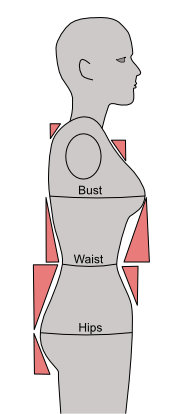
Dart Cutouts for Body Shaping
In the side view, the red wedges sit where the body curves in and out. Notice how the bust sticks out and then the body draws in at the waist.
A dart that fits the contours of the body changes the direction of the grain around it. Where you put a dart matters, especially on the upper body.
Drafting a Dart
Darts are an incredibly important part of pattern drafting and serve to form the fabric to the body. How they are drafted can be a bit confusing.
When drafting a dart, you’ll determine the dart apex and the dart width. The dart apex is the point of the dart within the body of the pattern. The width is shown by the distance between the dart legs at the edge of the pattern. This shape forms a triangle pointing into the body, but at the seam edge, it extends outward into a pointed roof shape.
The reason for this is the extra material needed for the dart turnback extension shown in the illustration below. Darts are folded closed and then pressed to one side or the other. Generally, vertical (waist-bust) darts press toward the center of the garment, while horizontal (side-bust) darts press downward. When the dart folds over it requires additional fabric at the edge of the pattern.
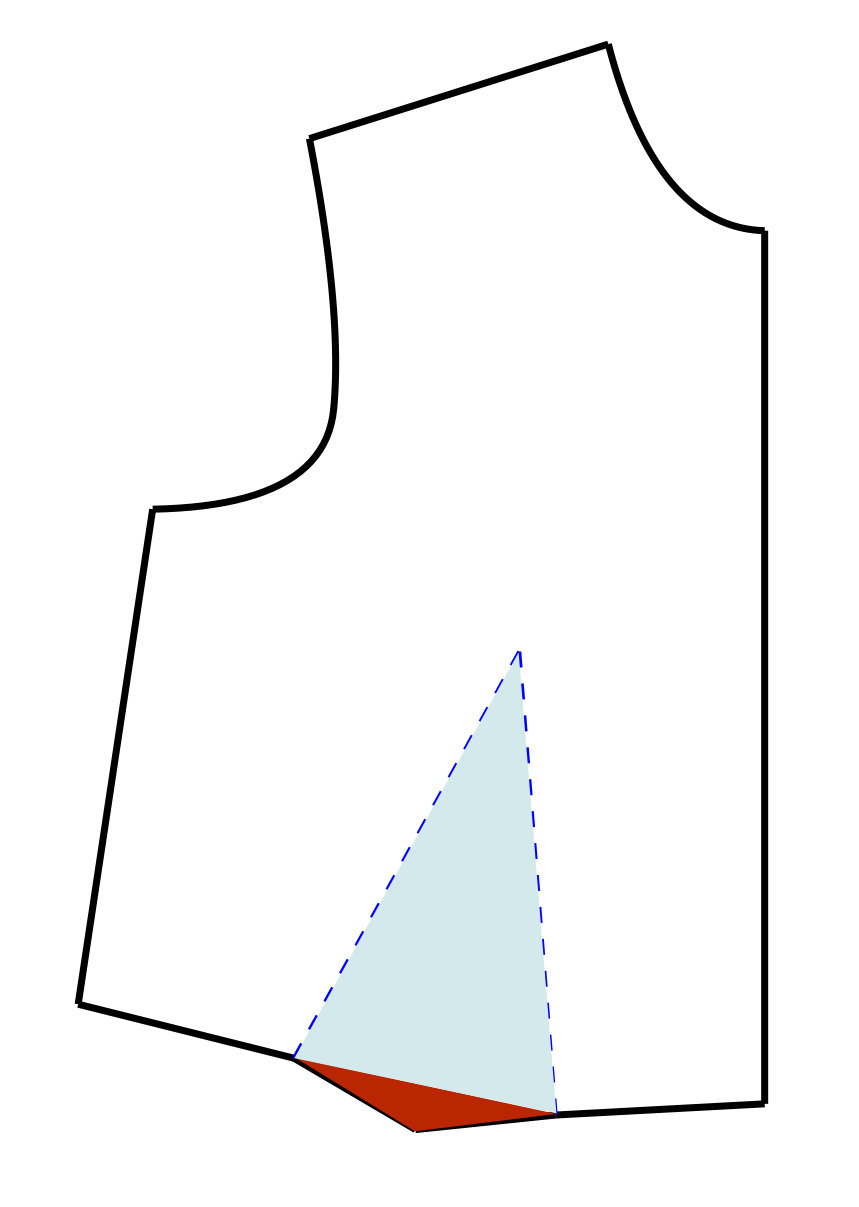
Bust Dart with Folding Extension
When you create darts in PatternMaker Pro, you can register them. During this process it asks you to define the direction of the fold. It then calculates that extra fabric required and adds the geometry for it. It also equalizes the length of the dart legs so they are the same to avoid puckering when sewing.
One Dart, Many Looks
A dart is not fixed in place. Its intake is a set amount of fabric, and you can move it, split it or turn it into something else without losing the fit.
| The Intake Becomes | What You Get |
|---|---|
| A stitched dart | The shaping wedge, as drafted |
| A style line | A seam, such as a princess seam |
| Gathers | Soft fullness where the dart was |
| Pleats | Folded fullness |
| Release tucks | Tucks stitched part way, then released |
These are called dart equivalents. Learning to move and change the intake is the heart of custom pattern design, and it is what the next lessons are about.
A Short History
I cannot give you one neat date for when darts arrived, and the books I looked at do not give one either. Here is the picture as far as I can piece it together.
Before the 1800s. Garments were rarely shaped with darts. Stays or corsets underneath gave the body its shape, and gathers and pleats arranged the outer fabric over that base.
The 19th century. By the middle of the century, bodices for home sewers were simple pieces with fitting darts. By the end of the 1860s they had become more complex, curved pieces joined by seams, and the sewing machine made all those extra seams practical.
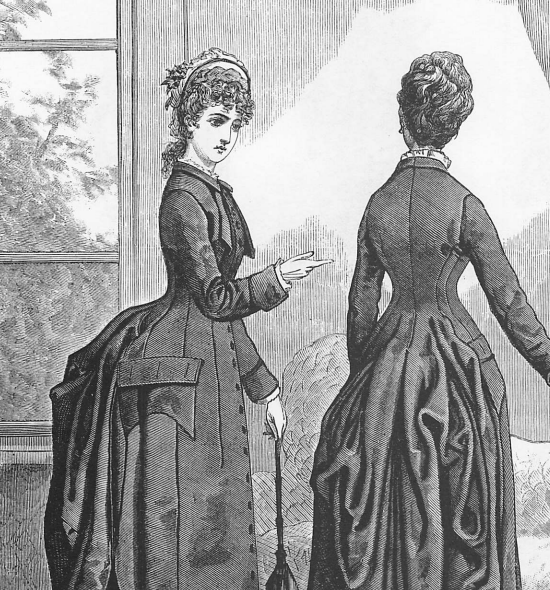
19th Century Tailored Shaping
The 1940s and 1950s. This was a great era for darts. Waist, shoulder and bust darts worked together to sculpt narrow waists and rounded bustlines.
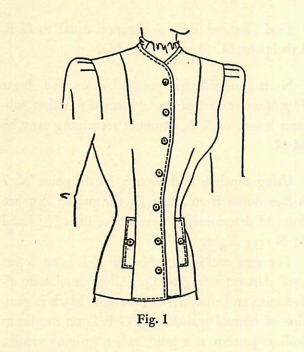
1940s Tailored Structure
Stretch knits. The more a fabric stretches, the less it needs darts. Stretch knit patterns generally leave them out, because the fabric stretches to fit the body, though there are a few exceptions, such as some jackets. Patterns drafted for knits start from slopers that have no darts or ease in them.