Grain and Fabric Prep
A pattern is flat paper. Fabric is not. Two garments cut from the same pattern can hang, stretch and wear in completely different ways, and the reason is almost always the fabric.
I learned that many years ago with a pair of corduroy pants. When I laid out the pieces, I turned one so the front pattern piece pointed one way and the back pointed the other. After the pants were sewn, the difference in the nap was extreme. Same fabric, same pattern, and the front and back looked like they came from different bolts.
This page covers the handful of fabric behaviors that change how you draft and cut.
Grain: The Direction the Threads Run
Woven fabric is made from two sets of threads that cross at right angles.
- Lengthwise grain (the warp) runs the length of the fabric, parallel to the selvage. It is the strongest and steadiest direction.
- Crosswise grain (the weft) runs from selvage to selvage. It has a little give.
- Bias is any diagonal. True bias is exactly 45 degrees between the two grains, and it is where woven fabric stretches the most.
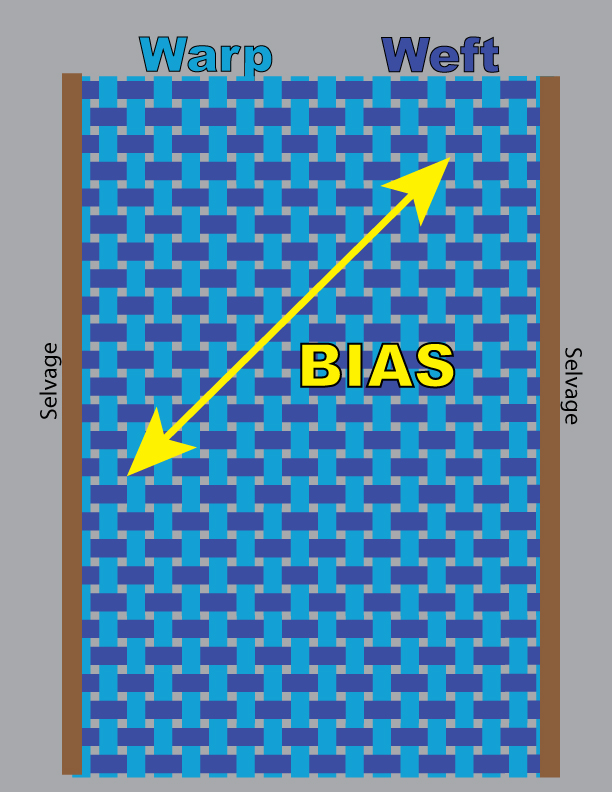
The selvage is the firmly woven edge the mill finishes so the fabric does not fray while it is made. It is tighter than the rest of the cloth. Garments are full of curves, so I rarely use the selvage in them, and in a seam that needs to lie flat you should cut it off or clip it. Home dec is different. I do use the selvage there.
Selvage is a big deal in one place: denim. True "selvage denim" (often spelled selvedge in the jeans world) is woven on slow, narrow shuttle looms that leave a self-finished edge that can't unravel. The cloth traditionally comes out only about 30 inches (75 cm) wide, so there is less of it and less yield per garment, and that is a big part of why jeans made from it cost so much more. You'll often see the selvage left on the outseam on purpose, with a colored thread running through it.
I recently bought some black high stretch selvage denim from Japan, and mine is a roomier 40 inches (100 cm) wide. I'm not entirely sure what I'll make with it yet.
Why You Care When You Draft
The grainline arrow on a pattern piece tells the cutter which way the piece sits on the fabric. Move that arrow and the same piece changes how it hangs.
- On the lengthwise grain, a piece keeps its shape and hangs straight. That is why most garments are cut this way.
- On the bias, a piece stretches and drapes. A skirt cut on the bias swings and clings. It also grows.
A bias-cut dress needs to hang for a while before you hem it, because the fabric lengthens under its own weight. Hang it overnight and recheck every seam.
Finding and Fixing Grain
Fabric does not always arrive straight. The threads can be pulled out of square on the bolt, and then a garment cut "on grain" is not really on grain.
Check it: Fold the fabric lengthwise, selvage to selvage, and look at the cut ends. If the ends line up and the fabric lies flat, you are square. If the ends do not line up, or the fold ripples, the grain is off.
Make a straight edge:
- Clip into the selvage near the end.
- Pick out one crosswise thread and gently pull it. The fabric gathers along it.
- Cut along the line of that thread.
I pull a thread or tear, depending on the fabric. Tearing across is the quick way, but it can stretch the edge so it curls afterward, and some fabrics just will not tear at all. For a knit, follow a row of loops across (a course) and cut along it.
If it is a little off: Steam press, then pin the edges together about every 5 inches (12 cm) before you lay it out.
If it is badly off: Gently pull the fabric in the opposite direction of the slant.
A few fabrics have a permanent finish that fixes the threads in place. Those can not be straightened, so choose another fabric if the ends will not square.
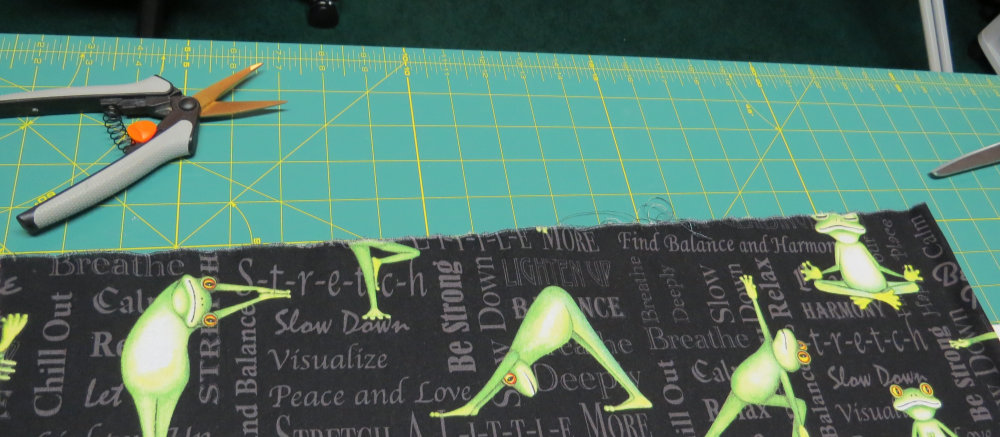
Sometimes the problem is the print, not the weave. I have a photo of a store-bought fabric that was printed crooked. If you cut it on the grain, the print looks way off. If you cut to follow the print, the pieces are off grain. Check before you buy.
Preshrinking
I always preshrink. You cannot get the feel of a fabric until it has been washed. A fabric can seem perfect for a garment straight from the store and completely fail after the first wash, and then all your sewing is a waste.
Many fabrics shrink the first time they are washed, so if you sew first, the garment shrinks after. Wash and dry the fabric the way you will care for the garment, before you cut. Preshrink whenever the bolt label allows about 1 percent or more of shrinkage. For knits, skip the detergent when you only want to shrink them, and look for any run in the knit as it dries.
Some fabrics need more than a wash. It was recommended that I wash my black selvage denim in vinegar three times before sewing, because black denim can bleed. I'll admit that intimidated me a bit.
Nap, Pile and One-Way Fabrics
My corduroy pants mentioned earlier were a nap problem. Some fabrics look different depending on which way you look at them. Velvet and corduroy have a pile. Napped fabrics like flannel have a fuzzy surface that lies in one direction. Satin and many knits shade, which means they look lighter or darker from different angles. Prints can run in one direction too.
For all of these, every piece must face the same way on the fabric. I go full paranoia on this and rarely deviate from facing all my pieces the same way. Better safe than sorry. On the down side, this changes your layout and the amount of fabric you need to buy, because you cannot flip pieces to save space.
Plaids and Stripes
I avoid plaids. They take a lot of time, and they have to be matched correctly or they look awful.
If a plaid or stripe has to match across seams, plan it before you cut. Allow extra fabric, about one pattern repeat for each length you need. Place the seam lines so the lines meet. This is a layout problem, not a drafting problem. If a plaid is going to cross a dart or a curved seam, it will not match everywhere, so when I do use one, I choose a pattern without curves or darts. A men's style dress shirt is a great choice, because you can cut the yokes on the bias for a nice contrast.
Choosing Fabric to Match the Design
Before you draft, check that the fabric can do what the design asks. Gather it in your hand to see how it behaves with fullness. Crush it to see how it wrinkles. Stretch it to see the give.
- A design with soft fullness wants a fabric that drapes.
- A design with structure wants a crisp fabric.
- A design that needs stretch wants a knit.
Grab two scraps and a ruler and test these ideas yourself in the Fabric Practice Run. No computer needed.