103 Bodice & Sleeve Sloper
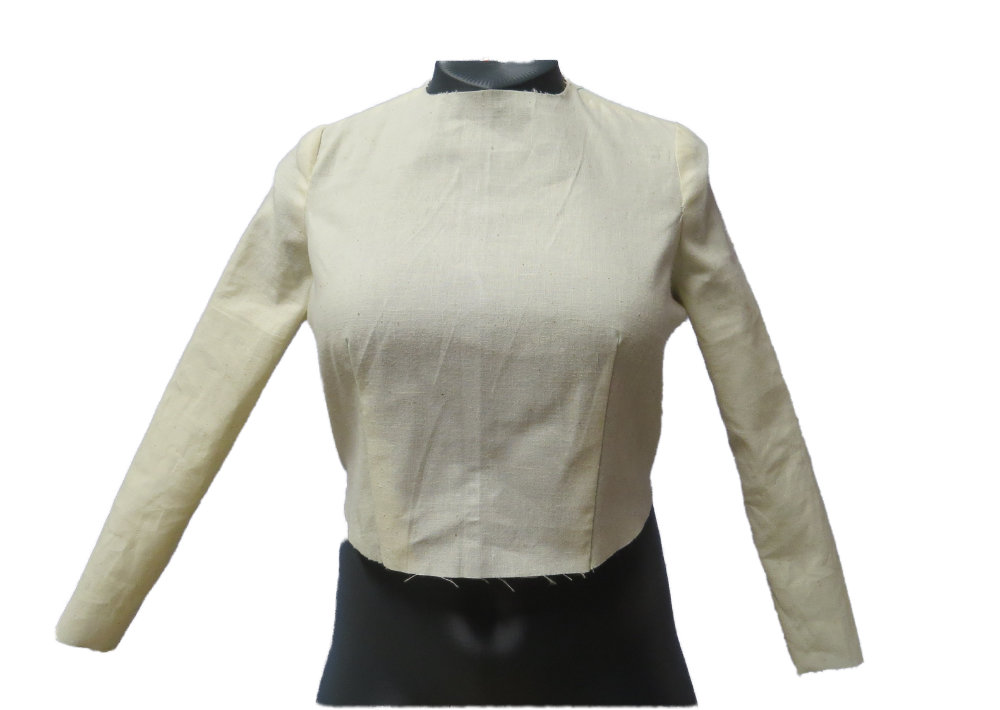
This bodice sloper set includes the front, back, and matching sleeve.
The bodice is adapted from Harriet Pepin’s classic 1942 text, Modern Pattern Design. This is one of my favorite reference books. It is noted for its exceptionally clean, logical drafting system that translates beautifully to both standard size charts and custom body measurements.
For the sleeve, this draft pairs Pepin’s foundational proportions with sleeve cap shaping adapted from Sylvia Rosen’s Patternmaking: A Comprehensive Reference for Fashion Design. Combining these two methods produces a more balanced sleeve cap curve and reliable cap ease. It takes the bodice armhole size into account.
- Category: Sloper
- Sizing: Standard or Custom
- Adaptation: Modern Pattern Design / Patternmaking: A Comprehensive Reference for Fashion Design
- Drafting Difficulty: Beginner
- Sewing Difficulty: Intermediate (multiple darts, sleeve cap ease)
- Components: Front, Back, Sleeve
Ease Analysis
Wearing Ease
The original draft didn't call for any ease, but you might want to add some bust and waist wearing ease to make the fitting easier. There are measurement set entries for Bust, Waist, Bicep, Elbow and Wrist Ease. You may want to include these variables so that a memorized draft can be instantly recalled with additional ease for other designs.
Design Ease
There is no intentional design ease, as this is a sloper.
Component Ease
My drafted bodice armhole was 19.21" (488 mm). My drafted sleeve cap was 20.05" (509 mm). This leaves the cap ease at 0.83" (21 mm). Rosen recommends a sleeve cap ease to be between 3/4" to 1.5" (19 mm to 38 mm). My draft was within this range.
Testing & Fit Evaluation
Test Setup
- Measurement Set: Susan
- Dress Form / Model: 1/2-scale form
Fit Analysis & Observations
- Fit: All of the darts work to create a very well fitted bodice. This is a great starting point for more advanced designs that remain fitted to the body.
- Sleeve Cap: The cap ease was minimal at 0.83" or 21 mm. This makes it much easier to sew than drafts with large amounts of cap ease.
- Methodology Note: This draft works great for the measurements of individuals. It would also work for standard size tables, if you wish to use those.
Before You Begin
Making a few key decisions before you start drafting will save you a lot of time and fabric later:
- Seam Allowances: Decide on your default seam allowance values. While a standard 0.5" (13 mm) allowance works well for most seams, you may want to use wider allowances, such as 0.75" (19 mm), on major body seams since this is a fitting sloper. However, keep your armhole and sleeve cap seam allowances small (around 0.25" to 0.375" / 6 to 10 mm), or you will have a very difficult time easing in the sleeve.
- Sleeve Hem: Decide whether you want to add a hem directly to the sleeve draft now, or leave it at the natural wrist line to finish later during fitting.
- Fitting Closure: You will need to get into the garment for fitting, so decide which seam to leave open for entry. If you are fitting someone else, leaving the center back open interferes the least with the overall fit. If you are fitting yourself, you will need to use the center front. Whichever you choose, do not cut that opening seam on a fold, and consider adding extra seam allowance there to make pinning and alignment easier.
Practice Run
View the instructions in your browser or save to your computer.
View the instructions in your browser or save to your computer.
View the instructions in your browser or save to your computer.
Pattern Draft SVG Download
Download the completed draft and import it into PatternMaker Pro. Learn how to use the Import PMP SVG tool.
